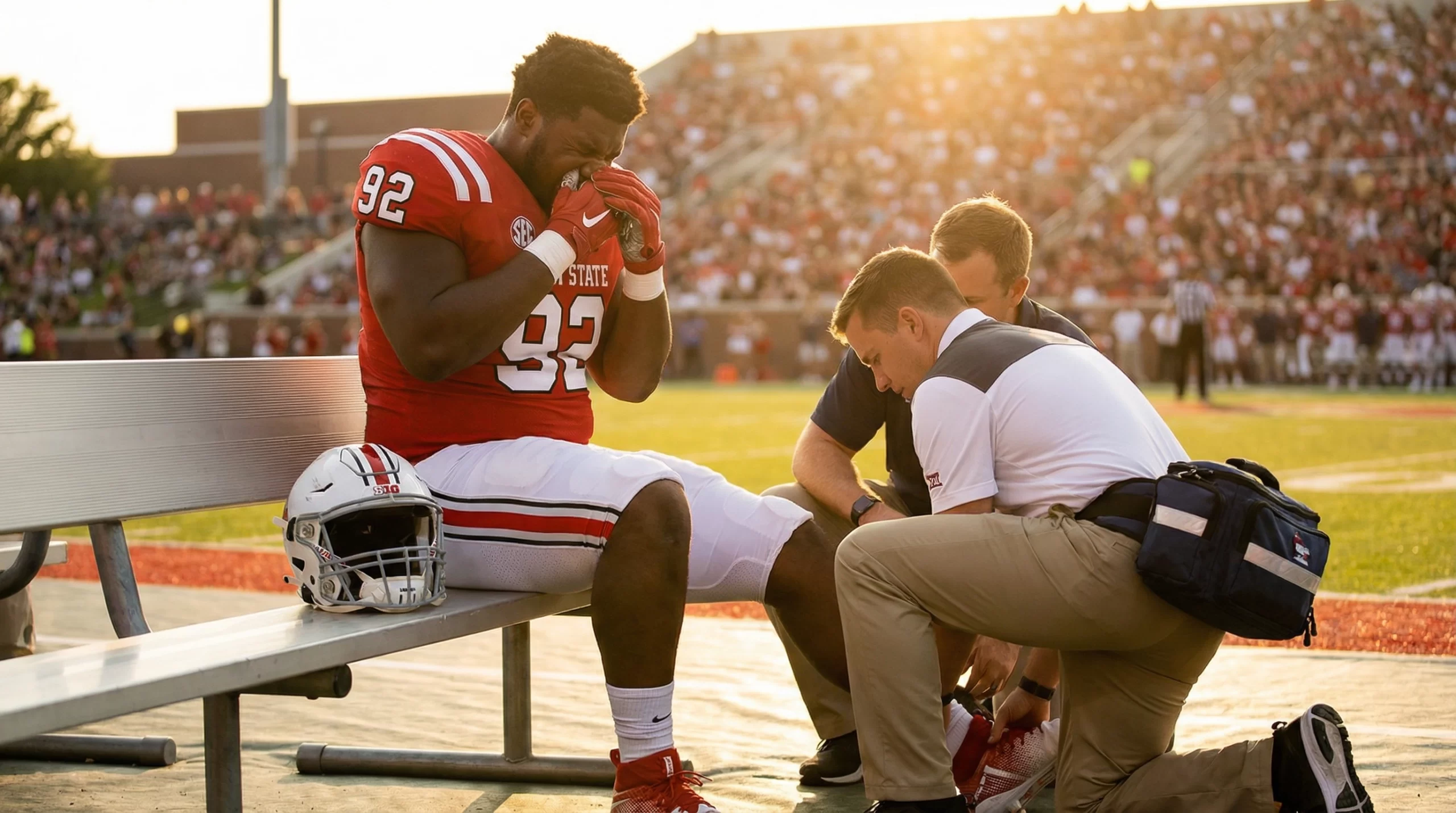
The 2026 NFL Scouting Combine was supposed to be the crowning moment for Florida Gators defensive tackle Caleb Banks. Instead, it became the site of a devastating medical setback. Just hours before he was scheduled to take the field for testing, Banks suffered a broken foot that required immediate surgery. This injury has sent shockwaves through NFL front offices and drastically altered the landscape of the upcoming draft.
For a player widely considered a top-five prospect at his position, the timing could not have been worse. Medical evaluations are a crucial component of the draft process, and a significant injury this close to April forces teams to re-evaluate their entire draft boards. The injury gossip surrounding Banks has intensified, with scouts and analysts debating how far the talented lineman might fall.
The Night Before the Combine: How the Injury Happened
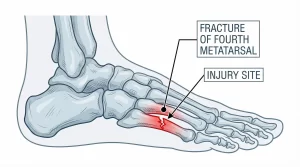
According to reports from top NFL draft analysts, Banks suffered the injury the night before his scheduled on-field testing in Indianapolis. The specific diagnosis is a fracture of the fourth metatarsal bone in his foot. What makes this story particularly compelling is that Banks actually participated in a partial workout without realizing the full extent of the damage.
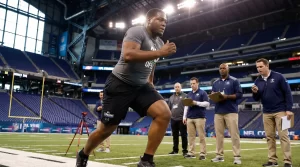
Despite the broken bone, the 6-foot-6, 327-pound behemoth managed to run a 5.04-second 40-yard dash. He also posted a 32-inch vertical jump and a 9-foot-6-inch broad jump. These numbers are astounding for a man of his size, let alone one competing on a fractured foot. His performance speaks volumes about his pain tolerance and competitive drive — traits that NFL coaches highly value.
However, the reality of the injury eventually set in. Banks was forced to withdraw from the remainder of the drills, initially citing discomfort with his shoe. Subsequent medical imaging revealed the fracture, leading to surgery performed by Dr. Norman Waldrop on March 9. The current recovery timeline suggests Banks will be sidelined until at least June, meaning he will miss all pre-draft workouts, pro days, and rookie minicamps.
A Troubling History of Foot Injuries
While the combine injury is devastating on its own, it is the context of Banks’ medical history that has NFL general managers truly concerned. This is not an isolated incident. Banks has a documented history of lower-body issues that date back to his time at the University of Florida.
During the 2024 season, Banks suffered a foot injury against Florida State that forced him to miss the team’s bowl game and the entirety of spring camp in 2025. He then re-injured the foot during fall camp, causing him to miss the first two games of the 2025 season. Just when he seemed to be getting healthy, he suffered another setback in a Week 3 loss to LSU, which required surgery and cost him seven more games. Ultimately, he played in just three games during the entire 2025 season.
This pattern of recurring foot problems is a massive red flag for NFL teams. Defensive tackles carry an immense amount of weight and generate incredible force through their lower bodies on every single snap. The structural integrity of their feet is paramount to their success and longevity in the league. When a player weighing nearly 330 pounds repeatedly fractures bones in his feet, teams must question whether his body can withstand the grueling 17-game NFL schedule. According to the Mayo Clinic, metatarsal fractures in athletes are among the most common foot injuries and carry a notable risk of re-fracture if not fully healed before returning to high-impact activity.
The Impact on Banks’ Draft Stock
Before the combine, Banks was widely regarded as one of the premier defensive players in the 2026 class. Prominent draft analysts from major networks consistently ranked him as a top-five defensive tackle, with some placing him as high as number two. His rare combination of size, length (99th percentile wingspan among all defensive tackles since 1999 ), and explosive power made him a virtual lock for the first round.
Now, his draft projection is entirely uncertain. The NFL is a risk-averse league when it comes to early draft picks. Investing a first-round selection in a player who is currently recovering from surgery and has a history of chronic foot issues is a gamble that many general managers simply cannot afford to take. As the NFL Player Health and Safety program emphasizes, long-term player durability is a critical factor in roster construction decisions.
As a result, many experts predict that Banks will slide down the draft board. While his talent is undeniable, the medical risks may push him into the late first round, the second round, or potentially even further. Teams with multiple early picks or those with established depth on the defensive line might be more willing to take a chance on his upside, viewing him as a high-reward stash for the future. This situation is not unlike what the American Academy of Orthopaedic Surgeons describes as a recurring stress fracture pattern — a condition that demands careful, long-term management.
How Teams Evaluate Medical Red Flags
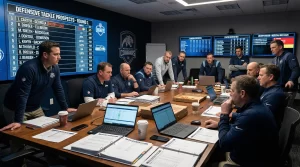
The evaluation of injured prospects is one of the most complex aspects of the NFL Draft. Teams rely heavily on their medical staffs to provide accurate assessments of a player’s long-term prognosis. In Banks’ case, team doctors will be scrutinizing his surgical records, X-rays, and rehabilitation plan to determine the likelihood of future re-injury.
This situation is reminiscent of other high-profile prospects who entered the draft with significant medical concerns. Sometimes, players overcome these early setbacks and go on to have Hall of Fame careers. Other times, the injuries persist, and the player never fulfills their potential. The uncertainty is what makes draft day so unpredictable. For a deeper look at how similar injuries affect active NFL rosters, read our coverage of the Levi Onwuzurike ACL Injury and how the Detroit Lions were forced to restructure their entire defensive line strategy.
For teams in desperate need of defensive line help, the decision regarding Banks will be agonizing. Do they trust his undeniable talent and the toughness he showed by running a 5.04 forty on a broken foot? Or do they heed the warning signs of his extensive injury history and look for a safer, albeit potentially less talented, option? The Johns Hopkins Medicine Sports Injuries resource notes that athletes with repeated fractures in the same bone face significantly elevated risks of complications, including non-union fractures that may require additional surgical intervention.
The Road to Recovery
For Caleb Banks, the immediate focus must be on his rehabilitation. Dr. Waldrop’s surgery to repair the fourth metatarsal is just the first step in a long process. Banks will need to follow a strict recovery protocol to ensure the bone heals properly and regains its full strength before he can return to full football activity.
The projected timeline of returning in June means he will miss crucial on-field development time during his rookie offseason. He will not be able to participate in rookie minicamps or organized team activities (OTAs ). This lack of practice time will put him behind his peers in learning an NFL playbook and adjusting to the speed of the professional game. The Cleveland Clinic explains that fourth metatarsal fractures typically require 6 to 8 weeks of non-weight-bearing recovery, followed by a gradual return-to-activity program — a timeline that aligns closely with Banks’ June projection.
However, if Banks can fully recover and put these foot issues behind him, he still possesses the physical tools to be a dominant force in the NFL. His performance at the Senior Bowl, where analysts described him as one of the most dominant players on the field, proved that he can compete against top-tier talent. Furthermore, the team that drafts him will be getting a highly motivated player eager to prove his doubters wrong.
The injury also raises broader questions about how the NFL Combine process itself may contribute to player health risks. As we explored in our piece on the Brandon Aiyuk ACL Injury, the pressure placed on athletes to perform at peak levels — even when they are not fully healthy — can have serious long-term consequences. The National Institutes of Health has published research confirming that athletes who return to competition before full bone healing are significantly more likely to suffer re-fracture.
The 2026 NFL Draft will undoubtedly feature plenty of surprises, and the fall of Caleb Banks may be one of the most significant storylines of the weekend. Only time will tell if his broken foot is a minor detour or a defining obstacle in his professional football career. One thing is certain — every team with a pick in the first three rounds will be watching his recovery very closely.