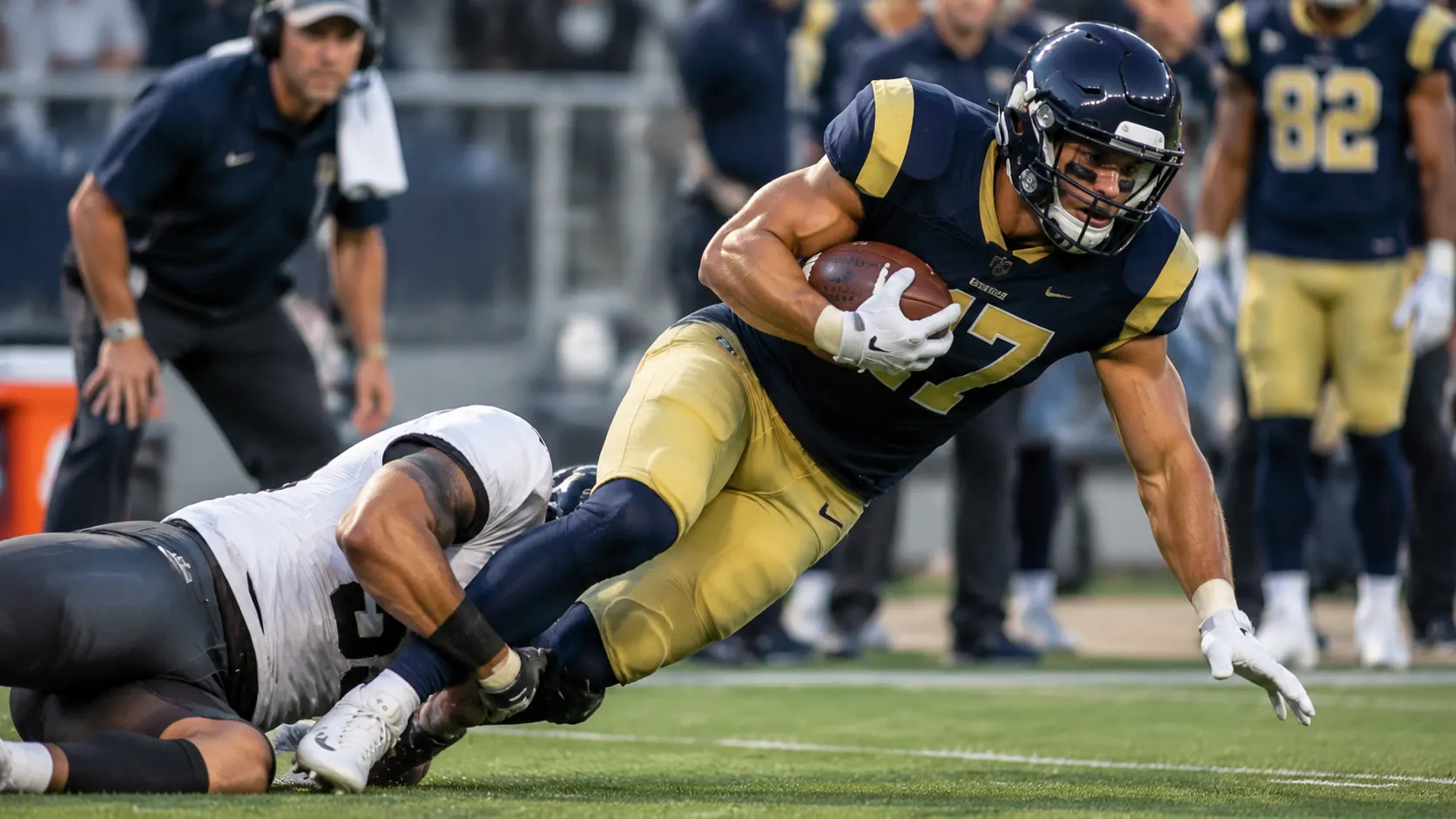
Los Angeles Rams wide receiver Puka Nacua is expected to miss an extended period after sustaining multiple injuries during the team’s November 8, 2026, win over the Washington Commanders. Head coach Sean McVay said Nacua sprained the medial collateral ligament (MCL) and posterior cruciate ligament (PCL) in his right knee and also suffered turf toe.
The combination matters for a receiver who depends on acceleration, balance, sharp route changes, and explosive push-offs. The Rams have not publicly disclosed injury grades or a confirmed return date.
Latest update as of November 12, 2026: The Rams said on November 11 that Nacua would not be placed on injured reserve because of roster considerations, not because of a change in his medical status. McVay said he would still be out for an extended period.
What Happened to Puka Nacua?
Nacua was injured on the Rams’ final offensive play in their 20-13 victory over Washington. He carried the ball on a jet sweep and was tackled near the end of the game. McVay later said an MRI showed MCL and PCL sprains in Nacua’s right knee, along with turf toe.
Nacua finished with 14 receptions for 150 yards and a touchdown. McVay initially said on November 9 that Nacua could be out for at least a month and was likely to go on injured reserve. On November 11, the team clarified that he would remain on the active roster for roster-management reasons, while still missing significant time.
What Do MCL and PCL Sprains Mean?
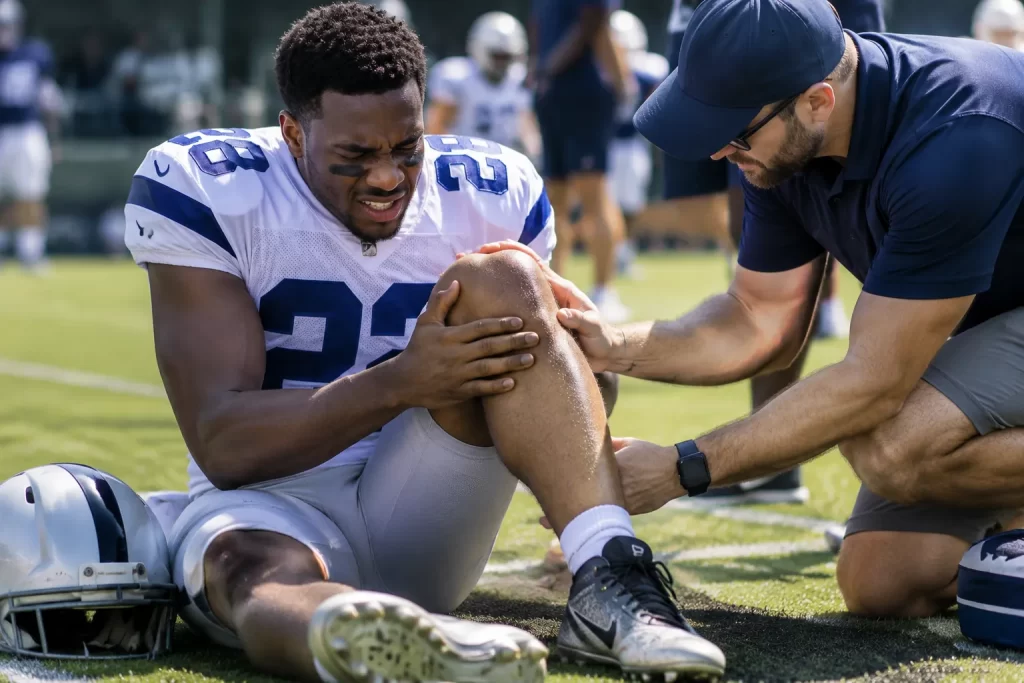
The MCL runs along the inner side of the knee and helps resist forces that push the joint inward. It can be stretched or torn when the outside of the knee takes a blow, or during a twist, awkward landing, or sudden change of direction. Symptoms may include inner-knee pain, swelling, tenderness, and a feeling of instability.
The PCL sits inside the knee and connects the thighbone to the shinbone. It helps control the shin’s backward movement. A PCL sprain can occur when the front of a bent knee receives a forceful impact, or when the knee twists or is forced backward. Pain, swelling, stiffness, and weakness can follow.
A sprain describes ligament damage, but it does not reveal the exact grade. Some injuries involve stretching; others involve partial or complete tearing. Because Nacua reportedly injured two ligaments, the medical team must assess overall knee stability and check for damage to other structures. The Mayo Clinic’s overview of MCL and PCL injuries explains how clinicians evaluate these conditions. The American Academy of Orthopaedic Surgeons also outlines collateral ligament injuries and treatment options.
What Is Turf Toe?
Turf toe is a sprain of the main joint at the base of the big toe, called the first metatarsophalangeal (MTP) joint. It commonly happens when the forefoot stays planted while the heel lifts and the big toe bends too far upward. That motion can strain or tear soft tissue beneath the joint.
The injury is associated with football but can also occur in soccer, basketball, and other sports that involve sprinting or pushing off the ground. A receiver uses the big toe and forefoot to accelerate, change direction, and drive out of a route. Pain or restricted toe movement can therefore affect performance even when the knee is improving.
The AAOS Turf Toe guide describes three grades, from stretched tissue to a more severe tear or joint disruption. Treatment depends on severity and may include rest, taping, stiff-soled footwear, a walking boot, rehabilitation, or, in selected severe cases, surgery.
Why the Combination Can Complicate Recovery
The knee and big toe perform different jobs, but both contribute to a receiver’s movement. The knee helps control landing, deceleration, and changes of direction. The big toe and forefoot help the athlete push off, accelerate, and maintain balance during a cut.
How Doctors Evaluate These Injuries
Evaluation usually begins with the injury history and a physical examination. A clinician may assess swelling, tenderness, range of motion, joint stability, walking ability, and how the foot and knee respond to movement.
X-rays can help identify fractures. MRI scans provide detailed views of knee ligaments, cartilage, and other soft tissues. For turf toe, examination and imaging can help determine whether the plantar complex or nearby structures are damaged. The Cleveland Clinic’s PCL injury resource explains how treatment depends on the extent of damage and the athlete’s symptoms.
What Treatment and Rehabilitation May Involve
Not every MCL or PCL sprain requires surgery. Depending on severity, care may include activity modification, a brace, temporary support while walking, pain and swelling management, and physical therapy. More serious injuries, persistent instability, or damage involving multiple structures may require specialist review and sometimes surgery.
Turf toe treatment also depends on severity. Less serious cases may be managed with rest, taping, and footwear that limits toe bending. More significant injuries may require immobilization and progressive rehabilitation. Surgery is reserved for selected cases involving substantial structural damage or instability.
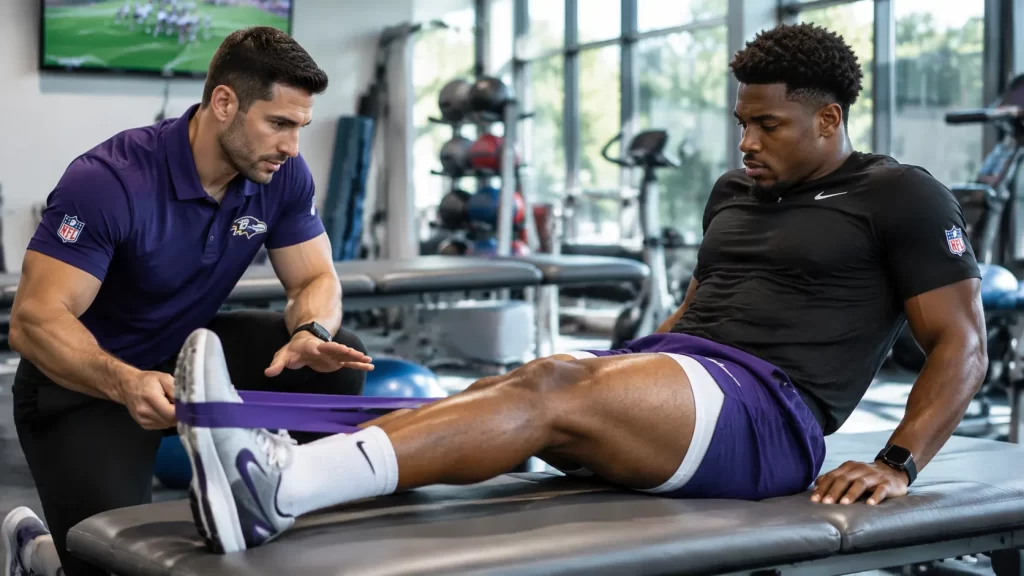
Rehabilitation generally progresses from protecting the injured area and restoring comfortable movement to rebuilding strength, balance, and control. Later stages may include running, acceleration, deceleration, jumping, and football-specific drills. Progress should be based on clinical recovery, not a calendar alone.
What the Latest Rams Update Means
On November 11, McVay said the Rams would not place Nacua on injured reserve because of roster considerations. He emphasized that the decision did not reflect new information about the injury and that Nacua would still be out for an extended period.
An injured-reserve designation is a roster transaction, not a medical diagnosis or a guarantee about recovery speed. Remaining on the active roster does not mean a player is ready to practice or play. The Rams have not announced a confirmed return date, so projected weeks should be treated as speculation until the team provides an official update.
For more on how teams balance training demands and recovery, read Injury Gossip’s articles on load management and soft tissue injuries and wearable technology in sports injury prevention.
What a Safe Return to Football Could Require
Before a receiver returns to full competition, medical staff may look for stable knee function, useful range of motion, restored strength, controlled swelling, and the ability to push off through the forefoot without significant pain. The athlete may also need to demonstrate that he can accelerate, stop, cut, land, and complete position-specific drills safely.
There is no single test or timetable for every athlete. Injury severity, toe function, response to rehabilitation, and the demands of the position all influence the decision. A return should be cleared by the treating medical team, not based only on roster deadlines or fan expectations.
What Other Athletes Can Learn
Recreational and youth athletes should take knee pain, swelling, instability, and persistent big-toe pain seriously after a collision or awkward landing. Seek medical evaluation when symptoms are significant, a joint feels unstable, or normal walking is difficult.
Strength work, movement training, appropriate footwear, and gradual increases in training load can support injury prevention, although no program eliminates all risk. Injury Gossip has also covered Achilles injuries in the NFL, the youth sports injury epidemic, and the mental health challenges that can accompany athlete recovery.
Final Thoughts
Puka Nacua’s MCL and PCL sprains, along with turf toe, show how one football play can create several challenges for an athlete’s lower body. The Rams’ latest update says he will miss an extended period, but the team has not published injury grades or a confirmed return date.
Until more information is released, follow official team updates and avoid treating roster decisions or outside predictions as medical clearance. The priority is restoring knee stability, foot function, and the ability to perform football movements safely before returning to the field.
Sources and Further Reading
- Los Angeles Rams: Initial Puka Nacua injury update, November 9, 2026
- Los Angeles Rams: Roster-status clarification, November 11, 2026
This article is for general sports-health information and is not a diagnosis or treatment plan. Individual injuries require assessment by a qualified healthcare professional.