
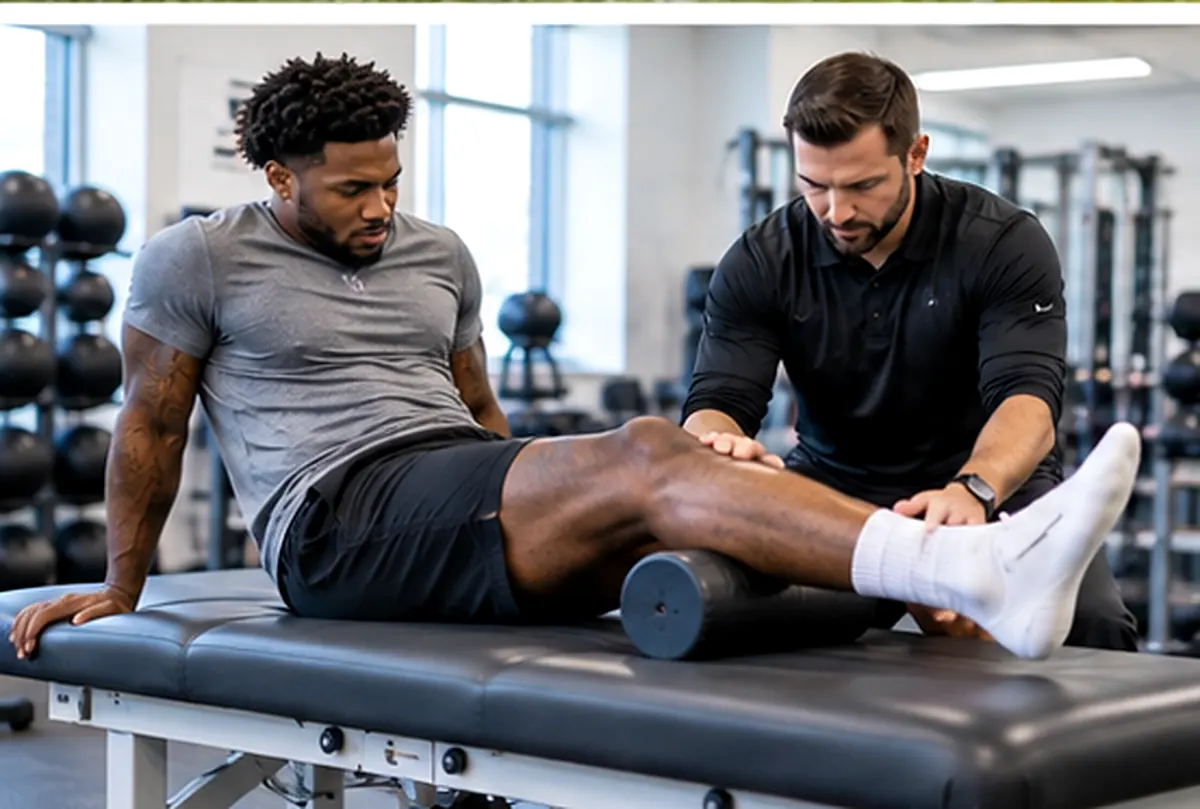
Calf pain in football usually suggests a bruise, strain, or cramp. But the October 2026 medical updates involving Philadelphia Eagles quarterback Jalen Hurts have spotlighted a different, potentially life-threatening condition: blood clots.
On October 19, the Eagles and Hurts’ agent announced that he had been diagnosed with deep vein thrombosis (DVT) and bilateral pulmonary emboli, meaning clots were identified in a deep vein and in both lungs. The team described him as clinically stable and said his treatment would involve anticoagulant medication. The diagnosis also raises questions about recognizing warning signs and returning to contact sports while on blood thinners.
What Happened to Jalen Hurts in October 2026?
The case developed over several days, according to the Eagles’ October 15 statement. The team said Hurts reported a calf issue on October 8 after receiving a cleat to the leg during the October 4 game against the Los Angeles Rams. An ultrasound performed in London on October 10 identified a superficial vein clot.
After a medical review, Hurts played against Jacksonville on October 11. The Eagles subsequently announced that follow-up imaging showed a change in the clot and that he would miss the following game. On October 19, the team and his agent issued a further update confirming DVT and pulmonary emboli in both lungs.
Officials said Hurts would not participate in contact football while receiving blood thinners. Although the team expressed optimism about a full recovery, an exact return-to-play date was not announced. The complete cause and progression cannot be established from public reports alone.
What Are DVT and Pulmonary Embolism?
A deep vein thrombosis is a blood clot that forms in a deep vein, commonly in the lower leg, thigh, or pelvis. A pulmonary embolism, or PE, occurs when a clot blocks blood flow in an artery of the lungs. Together, DVT and PE fall under the term venous thromboembolism.
The Centers for Disease Control and Prevention explains that these conditions can affect otherwise healthy people. Pulmonary embolism requires emergency care.
A superficial vein clot is different from DVT. Superficial thrombosis involves veins closer to the skin; DVT involves the deeper venous system. Their management can differ.
Why Calf Pain Can Be Easy to Misread
Football players regularly experience muscle soreness, impacts, cramps, and strains. Unfortunately, some symptoms associated with a clot overlap with ordinary sports injuries. Leg pain may initially seem like a minor problem, particularly after a tackle or direct contact.
Possible warning signs of DVT include swelling in one leg, unexplained tenderness, warmth, and changes in skin color. Some people have few symptoms or none at all. An athlete’s ability to walk, run, or exercise does not, by itself, rule out a blood clot.
Pulmonary embolism symptoms include sudden shortness of breath, chest pain, rapid heartbeat, fainting, or coughing up blood. Possible PE symptoms require emergency medical attention; suspected DVT also requires prompt evaluation.
Can Fit Professional Athletes Develop Blood Clots?
Yes. Elite fitness does not make an athlete immune to vascular conditions. However, it would also be misleading to say professional athletes as a group are automatically more likely to develop clots than everyone else.
The American Heart Association’s discussion of blood clots in sports identifies several relevant circumstances: injuries, operations, immobilization, extended travel, and certain repetitive movements. Individual medical history, inherited clotting tendencies, and other health factors may also influence risk.
Injury Gossip’s coverage of Achilles injuries and NFL recovery concerns a different lower-leg problem. Both topics demonstrate why a specific diagnosis matters more than a vague description of pain.
Does Team Travel Increase the Risk?
Professional teams travel frequently, sometimes on long flights before and after games. Remaining seated for extended periods can slow blood flow in the legs, particularly when someone has additional risk factors.
The CDC’s guidance on blood clots during travel recommends recognizing symptoms, moving periodically when possible, and discussing personal risks with a healthcare professional. Travel does not establish the cause of Hurts’ condition.
The travel discussion intersects with Injury Gossip’s reporting on load management and soft tissue injuries and its football heat illness coverage. These conditions involve different medical processes and should not be confused with DVT.
How Doctors Diagnose a Suspected Blood Clot
A clinician cannot rule out DVT from appearance or athletic performance. Diagnosis depends on history, examination, risk factors, and testing.
For suspected DVT, clinicians often use duplex ultrasonography. D-dimer blood testing may help in selected circumstances; suspected PE may require CT pulmonary angiography.
The National Heart, Lung, and Blood Institute outlines these diagnostic approaches. Testing decisions depend on the patient’s symptoms and clinical circumstances.
Why Blood Thinners Change Return-to-Play Decisions
Anticoagulants, commonly called blood thinners, are frequently used to manage DVT and PE. They help prevent existing clots from enlarging and reduce the formation of new clots while the body gradually deals with the obstruction.
But anticoagulants also increase bleeding risk. That becomes especially important in football, where tackles, falls, and collisions are unavoidable. A player might otherwise feel physically capable of training while still facing medical restrictions because of the medication.
According to the NHLBI’s treatment guidance, the length and type of therapy depend on the cause and characteristics of the clot and the individual’s health. An athlete should never change or stop anticoagulants independently to participate in a game.
Why the NFL and Players’ Union Are Reviewing the Case
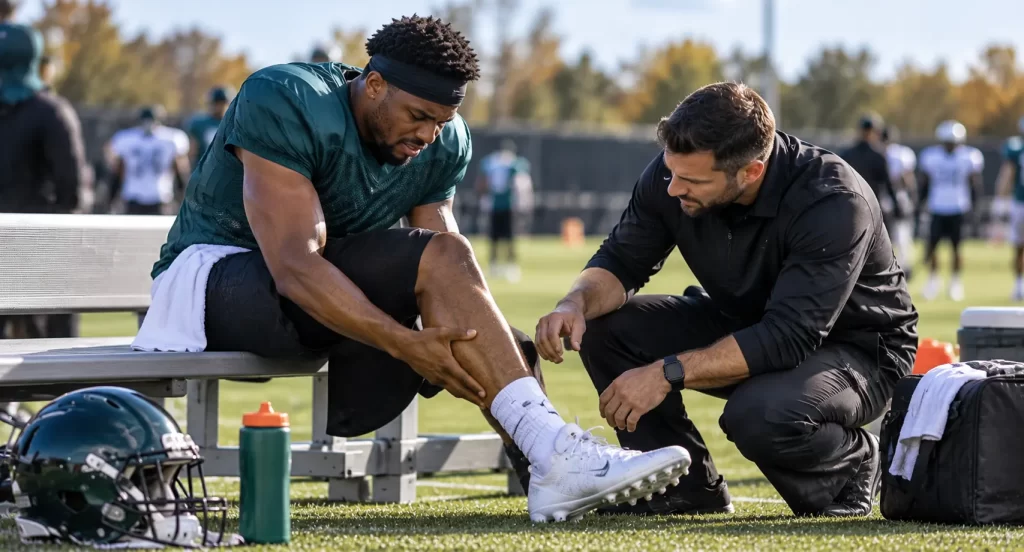
On October 25, the NFL and NFL Players Association announced a joint review of Hurts’ medical care after the union called for an investigation.
Associated Press reporting published by NFL.com describes the joint review and the competing public assessments of the earlier medical decisions. Importantly, an announced review is not itself a finding that medical personnel acted improperly.
The broader question is how teams balance competitive demands with evolving medical information. Players, coaches, doctors, agents, and league officials may have different responsibilities, but reliable follow-up and clear communication remain important whenever a health condition may change rapidly.
What Recovery Might Look Like for an Athlete
There is no universal timetable for returning to competitive sports after DVT or pulmonary embolism. Physicians must consider clot resolution or stability, treatment requirements, bleeding risks, lingering symptoms, and the physical demands of the athlete’s sport.
Some people can resume suitable physical activity during recovery under clinical guidance, while collision sports may remain restricted for longer. The NHLBI recovery guidance recommends asking a healthcare provider when and how to be active again.
Temporary restrictions can also affect motivation and confidence. As discussed in Injury Gossip’s article on the mental health impact of injuries on athletes, rehabilitation often involves emotional challenges as well as physical ones.
What Coaches, Athletes, and Fans Can Learn
The central lesson is not that every sore calf signals a blood clot. Most sports-related leg pain has other explanations. Instead, the lesson is that persistent or unusual symptoms deserve careful attention, especially when swelling, warmth, unexplained tenderness, or other warning signs are present.
Coaches and athletes should avoid assuming that someone is healthy simply because they finished practice or completed a game. Trainers also need systems for documenting complaints, escalating concerns, and arranging timely medical follow-up.
Wearable metrics cannot replace vascular imaging or medical evaluation. Injury Gossip’s post on wearable technology in injury prevention explores those tools in a broader context.
Final Thoughts
Jalen Hurts’ October 2026 diagnosis has made blood clots a major subject in NFL injury coverage. The confirmed medical statements explain the condition and treatment restrictions, while the league and players’ union review addresses questions about the earlier handling of the case.
For readers, the most useful takeaway is to recognize the difference between ordinary soreness and symptoms that require medical evaluation. Blood clots can affect athletes, and prompt diagnosis matters. Football results, return dates, and roster implications are secondary to protecting a player’s health.
This article is for general sports-health information and does not provide an individual diagnosis or treatment plan. Seek emergency care for symptoms of a possible pulmonary embolism.