
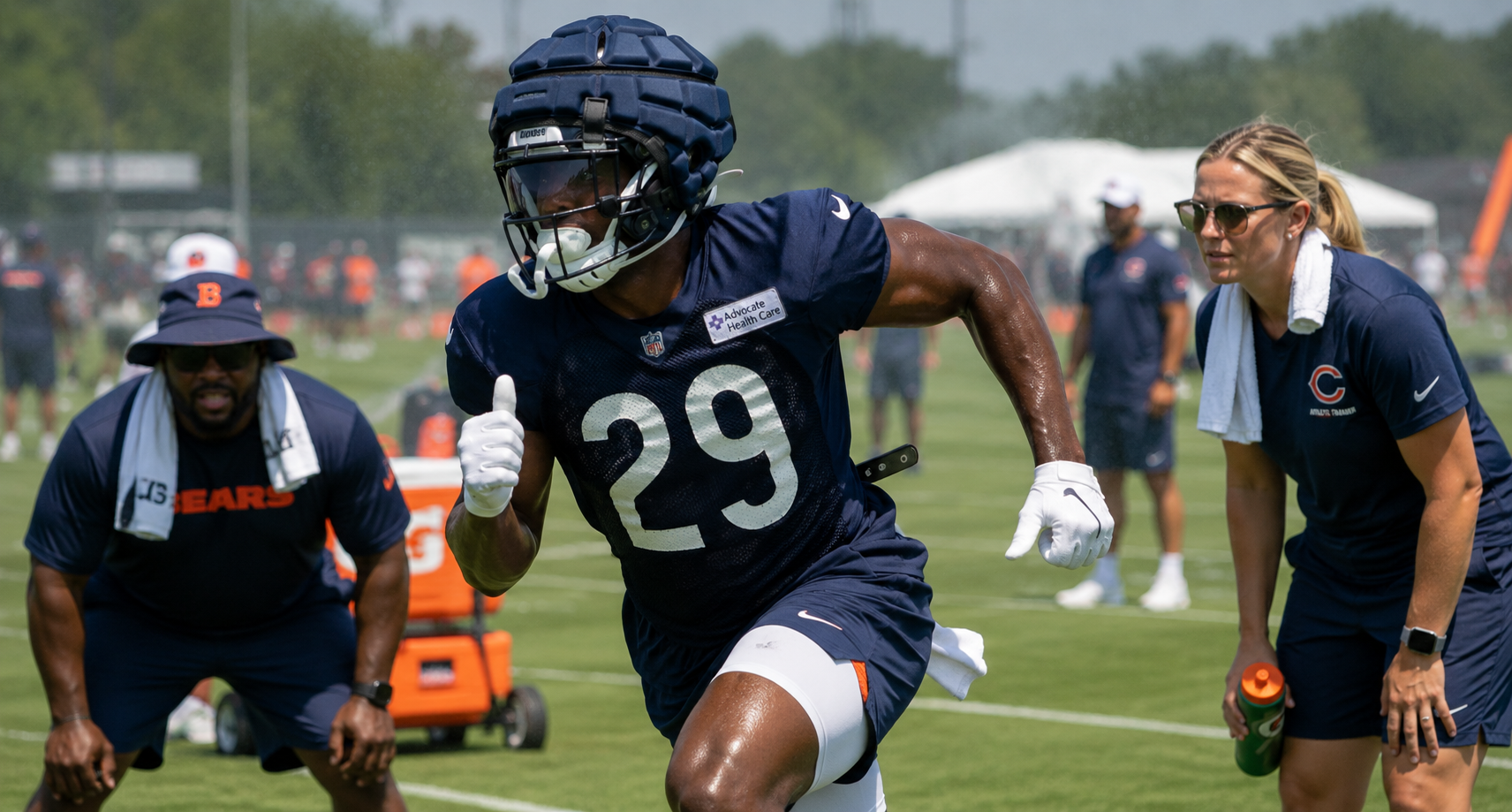
Football training camps are among the most physically demanding periods of the sports calendar. Players are returning to intense practices, wearing heavy protective equipment, and competing in hot summer conditions. In 2026, heat illness remains a major athlete safety concern as professional, college, and youth football programs prepare for another season.
The timing makes the issue especially relevant. NFL training camps are underway across the country, while schools and youth programs are preparing for fall sports. Recent reports have highlighted serious health incidents during summer training, adding renewed attention to heat preparation and athlete monitoring.
Injury Gossip already covers load management and soft tissue injury concerns, but heat creates another challenge that deserves attention during the preseason.
Why Football Training Camp Creates Heat Risks
Training camp combines several factors that can increase heat stress. Players may practice for extended periods while wearing helmets, shoulder pads, pants, and other equipment. The combination of physical exertion, protective gear, humidity, and direct sunlight can make it harder for the body to release heat.
The Centers for Disease Control and Prevention notes that people exercising on hot days face increased risks of dehydration and heat-related illness. The agency also advises adjusting outdoor activity based on heat conditions and stopping activity when someone feels faint or weak. CDC guidance for athletes provides additional information about recognizing and reducing these risks.
Football also creates a unique challenge because protective equipment can limit natural cooling. Players may sweat heavily without realizing how quickly their bodies are losing fluids and heat.
Heat Illness Is More Than Dehydration
Heat illness describes several conditions that may develop when the body struggles to regulate temperature during physical activity.
Heat cramps may involve painful muscle spasms during or after strenuous activity. Heat exhaustion may involve heavy sweating, weakness, dizziness, nausea, headache, and other symptoms.
Exertional heat stroke is considerably more serious. It can involve altered mental status, confusion, collapse, or other signs of central nervous system dysfunction. It requires immediate medical attention.
The National Athletic Trainers’ Association maintains specific guidance covering prevention, recognition, treatment, and return-to-activity considerations for exertional heat illness. Its current resources also highlight heat as an ongoing sports medicine concern. NATA’s sports medicine position statements include its exertional heat illness guidance.
Why The First Weeks Of Training Matter
The beginning of preseason can be particularly demanding because athletes are transitioning from offseason routines to organized team training.
Heat acclimatization allows the body to gradually adapt to exercising in hot conditions. The Korey Stringer Institute describes acclimatization as a process that generally develops over several days, with full adaptations taking longer. Training intensity, duration, equipment, and environmental exposure can be increased progressively.
The NCAA also uses acclimatization requirements for college football. Its current rules limit protective equipment during the early acclimatization period and place restrictions on practice structure and recovery time. NCAA football acclimatization rules illustrate how preseason training is structured around athlete safety.
This approach matters because suddenly moving from lower offseason workloads into long, equipment-heavy practices can create significant physical stress.
How Teams Monitor Heat Conditions
Modern training camps use more than air temperature when assessing environmental risk. Athletic departments and professional teams may monitor humidity, sunlight, wind, and wet-bulb globe temperature to understand the combined effect of environmental conditions.
Environmental monitoring can influence practice schedules, equipment requirements, rest periods, and hydration opportunities.
The National Federation of State High School Associations recently highlighted the need for football, soccer, volleyball, field hockey, and other fall sports programs to prepare for heat-related illness. Its 2026 guidance specifically addresses the elevated heat conditions that many programs face during summer preparation. NFHS heat safety guidance for fall sports provides additional context.
Hydration Is Only One Part Of Heat Safety
Hydration receives considerable attention during training camp, but heat safety involves more than drinking fluids.
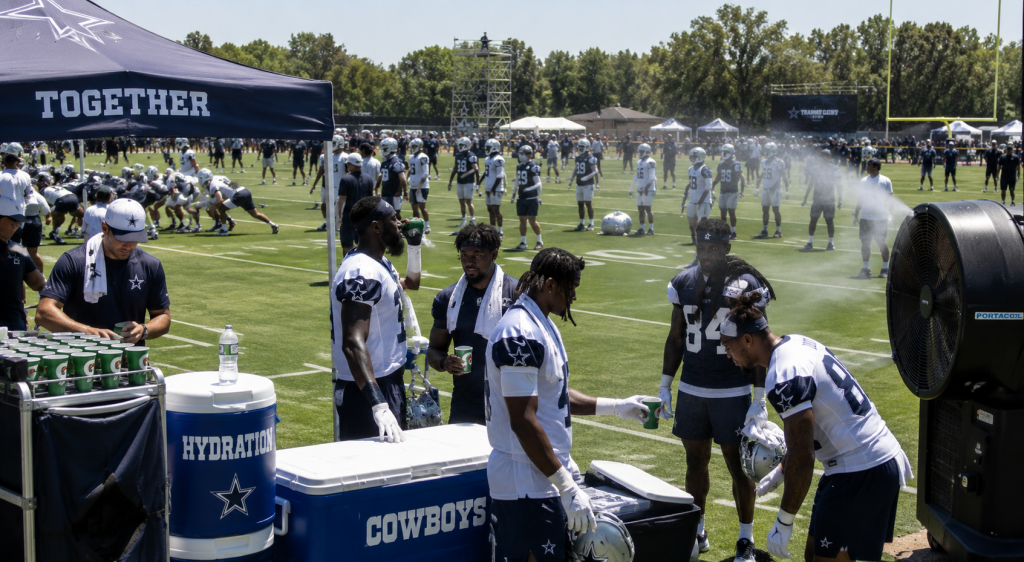
Teams may also use shade, cooling stations, cold towels, ice, modified practice schedules, equipment adjustments, and additional recovery periods.
The NCAA explains that hot and humid conditions combined with dehydration can compromise performance and increase the risk of exertional heat injury. Its nutrition, hydration, and sleep resources provide guidance for collegiate athletes.
Individual differences also matter. Athletes do not all respond to heat in the same way. Fitness, acclimatization, illness, previous heat illness, sleep, medications, and environmental exposure may affect risk.
Heat Can Affect More Than Physical Performance
Heat stress can influence concentration, decision-making, reaction time, and overall mental readiness. These factors matter in football because players must process information while performing high-speed movements.
Fatigue may also influence mechanics. An athlete who becomes exhausted may have difficulty maintaining proper movement patterns during sprinting, cutting, tackling, or blocking.
This creates a connection between heat management and other injury concerns. Injury Gossip’s coverage of wearable technology and injury prevention explores how teams are increasingly using data to monitor athlete workload and recovery.
The Role Of Athletic Trainers
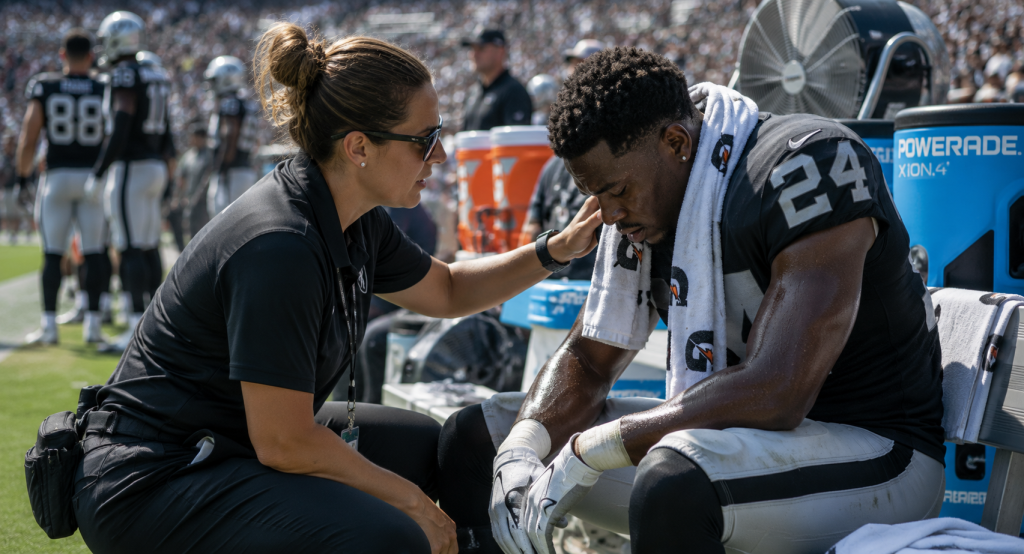
Athletic trainers play an important role in identifying athletes who may be struggling with heat. They can monitor symptoms, assess athletes during practice, modify participation, and coordinate emergency care when necessary.
Emergency planning also matters. Heat emergencies require rapid recognition and appropriate cooling procedures. The National Athletic Trainers’ Association emphasizes the need for organized prevention and emergency response strategies.
The Korey Stringer Institute also emphasizes rapid cooling when exertional heat stroke is suspected. Its educational materials explain that cooling should begin immediately rather than waiting for transportation to a hospital.
Young Athletes Face Additional Concerns
Heat safety is particularly relevant to youth and high school football. Younger athletes may have less experience recognizing early warning signs and may hesitate to tell coaches when they feel unwell.
This concern overlaps with the broader issues discussed in Injury Gossip’s coverage of the youth sports injury epidemic.
Fall sports programs also face a narrow window between the beginning of preseason practices and the start of competition. That makes gradual conditioning and heat acclimatization particularly relevant.
Recent Heat Incidents Have Renewed Attention
Heat safety has become an especially visible topic during the summer of 2026. A recent NFL training camp incident involving Jets cornerback Qwan’tez Stiggers resulted in an ambulance transport after he collapsed during a joint practice. The coach later said Stiggers was conscious and talking after receiving medical attention. Reports did not establish heat as the cause, but the incident occurred during a period of intense summer training and renewed attention on player safety. The NFL’s 2026 training camp information shows the scale and timing of preseason activity.
Outside football, a professional rugby player in Japan recently died after a suspected heatstroke following team training. The case has intensified broader discussion about heat risks during summer sports preparation.
These incidents demonstrate why athlete safety remains a major issue during the preseason, even when the exact cause of an individual medical emergency is not immediately established.
What The Future Of Training Camp Safety May Look Like
Technology is likely to become increasingly important in heat monitoring. Wearable devices may help teams track heart rate, workload, body movement, and other performance indicators. Environmental sensors can provide real-time information about field conditions.
Teams may also use individualized athlete profiles rather than relying on a single practice plan for every player.
This approach fits with the broader evolution of sports injury management. Injury Gossip’s coverage of concussion technology shows how sensors and data are becoming increasingly integrated into athlete safety decisions.
Heat Safety And The Bigger Injury Picture
Training camp injuries rarely have one single cause. Workload, recovery, conditioning, sleep, environmental conditions, and previous injuries may all influence an athlete’s readiness.
That makes heat management part of a much larger injury prevention strategy.
Injury Gossip’s article on the mental health impact of injuries also explores another part of athlete health that often receives less attention. Physical preparation and mental well-being increasingly overlap during demanding seasons.
Final Thoughts
Heat illness remains one of the most serious risks associated with summer sports training. Football players face particular challenges because preseason practices combine intense physical activity with protective equipment and potentially extreme environmental conditions.
Heat acclimatization, environmental monitoring, appropriate rest, hydration access, cooling resources, athlete education, and emergency planning all contribute to safer training environments.
As 2026 training camps continue, heat safety is likely to remain an important part of the sports injury conversation. The technology may become more sophisticated, but recognizing warning signs and responding quickly remain central to protecting athletes.